
Reviewed · CHOBE NATIONAL PARK SAFARIS
Chobe Overnight Camping safaris
Chobe National Park is famous for elephants, but the real appeal here is staying overnight close to the bush rather than rushing back to town. You begin at Kasane Airport, then spend time in an open safari vehicle looking for animals in their natural setting. The camp gives you a proper night outdoors, with sleeping gear, showers, meals, and a toilet inside your own unit.
I especially like two things: the maximum group of nine, which is small enough for a better view and easier conversation with the guide, and the attention to nighttime comfort. You do not need to walk outside to a shared toilet after dark. The main drawback is the short schedule: the published program gives you roughly one hour on the first day and three hours of game driving on the second, so this is a compact taste of Chobe rather than a long safari.
Key points to know before booking
- Elephant country: Chobe is known for large herds of elephants, along with buffalo and giraffes.
- One night in the bush: You sleep at a camp with equipment, showers, meals, and an in-camp toilet.
- Small group size: The vehicle and activities are limited to a maximum of nine people.
- Open safari vehicle: The second day includes about three hours of wildlife viewing in an open vehicle.
- Convenient starting point: Pickup begins at Kasane Airport at 8:30 am.
- Strong safety focus: The camp setup avoids the need for nighttime walks to an outside toilet.
Why an overnight Chobe safari is worth considering
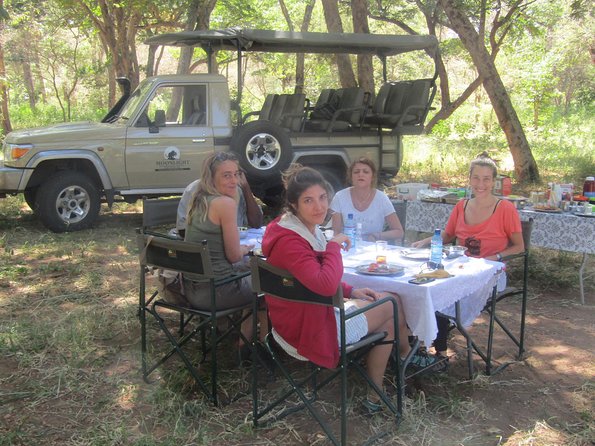
A day trip can show you Chobe National Park, but an overnight safari changes the pace. You are not simply checking off a park visit between other activities. You have time to settle into camp, eat a meal in the bush, and wake up ready for another look at the park.
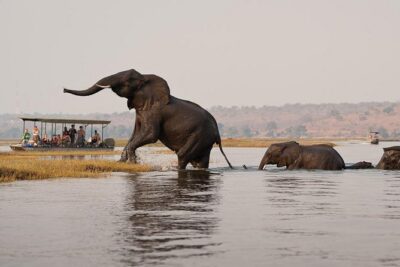
That matters because wildlife does not follow a sightseeing timetable. You may find elephants gathered in large numbers, giraffes moving through the area, or buffalo spread across open ground. Lions and hyenas have also been seen close to camp, though no safari can promise a particular animal.
The price is $420 per person, which is not a casual add-on for a short holiday. Still, it covers a two-day experience with an overnight camp, game viewing, equipment for sleeping, showers, toilets, and meals. The value is strongest if you want a compact safari with basic comfort rather than a simple park transfer or a brief drive.
You should keep the length in mind. The schedule is described as approximately two days, but the listed park activities add up to only about four hours: one hour on the first day and three hours on the second. The rest of the time is used for moving into camp, eating, resting, and handling the practical work of an overnight stay. If your top goal is many hours of wildlife viewing, a longer safari may suit you better.
Other Chobe days out of Victoria Falls:
- Victoria Falls: Chobe National Park Day Trip with Lunch
★ 4.7 · 518 reviews - Chobe Day Trip from Victoria Falls, Zimbabwe
★ 4.6 · 250 reviews - Chobe Day Trip From Victoria Falls Zimbabwe
★ 4.5 · 196 reviews
Starting at Kasane Airport at 8:30 am
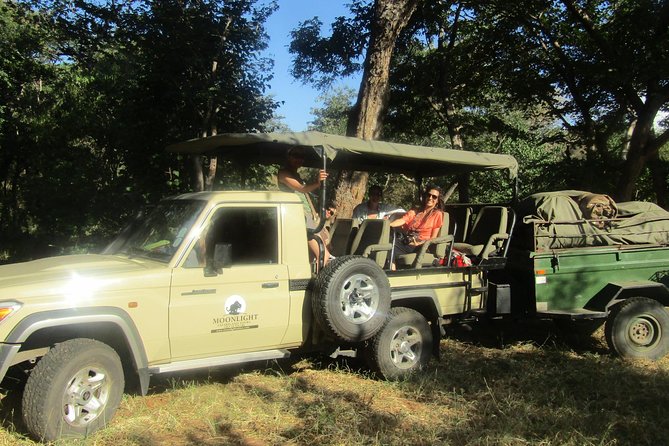
The meeting point is Kasane Airport in Botswana, in the Chobe National Park area. Pickup is offered, and the activity begins at 8:30 am. This is useful if you are arriving in Kasane and want to connect directly with a safari instead of arranging a separate transfer.
The stated location can cause confusion for anyone planning from Victoria Falls. The experience is marketed from Victoria Falls, Zimbabwe, but the actual start point is Kasane Airport, Botswana. Check your border-crossing and transport plans carefully before booking. The information provided does not give a transfer timetable from Victoria Falls to Kasane, so you should confirm that part directly with Moonlight Safaris.
The activity ends back at the meeting point. That makes the tour easier to fit around a trip based in Kasane, but you should not assume that it ends at your Victoria Falls hotel. Make sure your onward transport matches a return to Kasane.
The group limit is nine people. That is a useful middle ground. You get the shared energy and cost of a small group, without the crowded feeling of a large safari truck. A smaller group also makes it easier to ask the guide to pause, explain what you are seeing, or help everyone get a clear view.
Day one: entering Chobe and settling into camp
The first listed stop is Chobe National Park, with about one hour allocated to the park. The focus is on the area’s large herds of elephants and buffalo, as well as giraffes. Even a short first visit can help you get your bearings and begin watching how animals use the park.
The one-hour figure is worth treating as a guide rather than a guarantee of constant animal action. A safari drive includes time to move through the park, stop when something appears, and work with the conditions on the day. You might find a busy animal area quickly, or you might spend time searching.
The strongest reason to choose this tour over a standard day outing is what follows. You continue to an overnight bush camp instead of leaving the park experience behind. The camp is set up as a home away from home, with sleeping materials, showers, meals, and an inside toilet that is not shared.
That toilet arrangement is one of the most practical details here. Many people like the idea of camping but dislike the thought of walking through a dark camp at night. This setup means you can stay in your own space after dark, which adds comfort and a sensible safety measure.
The available information does not describe the exact tent style, bed type, shower arrangement, or cooking setup. You should ask Moonlight Safaris about those details if they matter to you. What is clear is that the camp is designed for real bush camping while providing basic facilities for sleeping, washing, and using the toilet.
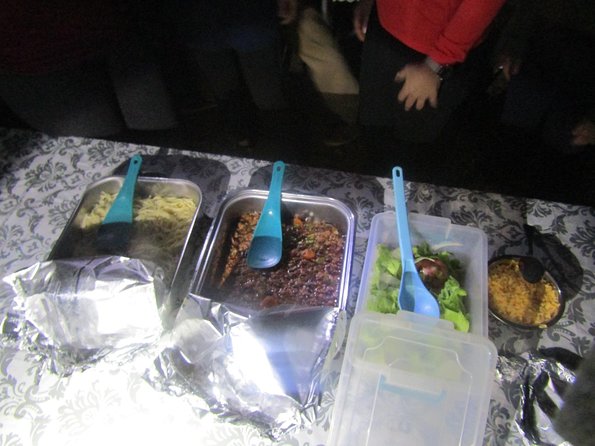
Meals are included in the camping experience according to the information provided. That is important at this price, since arranging food independently in a remote camp can be awkward. The available details do not list menus or dietary options, so share any food requirements before departure.
Sleeping in the bush without giving up basic comfort
This is not a luxury lodge stay, and you should not book it expecting hotel rooms or a full range of polished amenities. It is a real bush camping experience, supported by equipment for sleeping, showers, meals, and toilets.
That balance will appeal to you if you want the sound and feel of camping but still care about a clean place to wash and a private toilet. It may be less appealing if you want a private room, air conditioning, or a predictable indoor setting.
The camp’s safety arrangements deserve particular attention. You are not required to go outside at night to find a toilet, and the toilet is inside your own space rather than shared. That does not remove the need to follow the guide’s instructions in camp, but it does reduce one common worry about sleeping in a wildlife area.
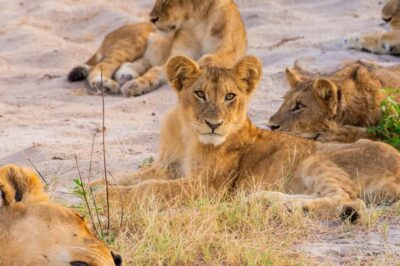
The reports of lions and hyenas close to camp add to the excitement, but they also show why camp rules matter. You should follow the guide’s directions about moving around, storing belongings, and remaining in the appropriate areas. The data provided does not state a specific night watch or security system, so do not assume one is included.
A good overnight safari is partly about patience. You may not see animals every minute, but the night itself is part of the experience. You get a different sense of the park when you are not returning to a town hotel after sunset.
Same base, a different sort of day:
- Helicopter Scenic Flight over Victoria Falls 12-13 minutes Flight
★ 5.0 · 1,391 reviews - Victoria Falls: Dinner Cruise on the Zambezi River
★ 4.9 · 925 reviews - Dinner Cruise on the Zambezi River
★ 5.0 · 518 reviews - Victoria Falls: Boma Dinner and Drum Show
★ 4.4 · 415 reviews
Day two: three hours in an open safari vehicle
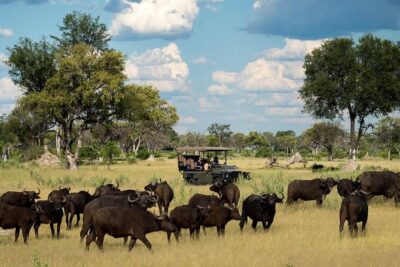
The second day brings the main game drive, lasting about three hours. You ride in an open safari vehicle and look for wild animals in their natural habitat. This is the clearest wildlife-focused portion of the program.
An open vehicle gives you a less enclosed view than a standard car. You can look in more directions and feel closer to the bush, though you should be prepared for sun, dust, and changing weather. The supplied details do not mention shade, seat style, or vehicle layout, so ask about those points if you have mobility or comfort concerns.
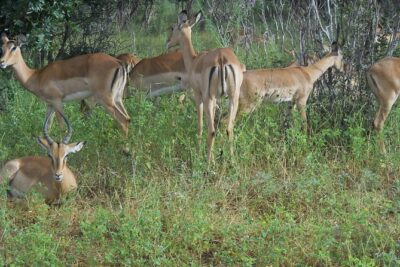
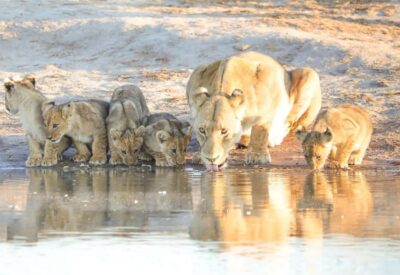
Chobe’s headline animals are elephants, buffalo, and giraffes. The experience can also produce sightings of lions and hyenas. One account described lions and hyenas close to camp, while another highlighted many elephants and giraffes. Those sightings are encouraging, but wildlife remains unpredictable. The responsible expectation is a chance to see animals, not a guaranteed list.
The guide plays an important role in making three hours worthwhile. A good guide watches the road, tracks signs of animal activity, positions the vehicle carefully, and keeps the group safe. The information provided names Bogosi in connection with one of the safari accounts and praises the guide’s care during a difficult moment. It also describes the guide as flexible and focused on making the trip productive.
Because the group is capped at nine, the guide should be able to respond to questions and keep the group together without the delays common in a large vehicle. Still, the quality of a drive depends on the day, the guide assigned, weather, and animal movement. Bogosi may not be the guide on every departure, so confirm who will lead your trip if a named guide matters to you.
What the animal viewing may look like
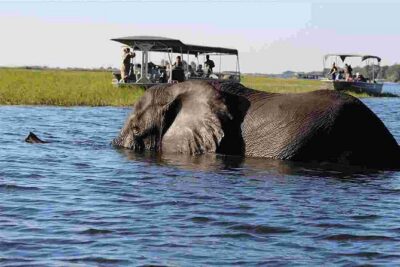
Chobe is especially appealing for elephant lovers. Large herds can create some of the safari’s most memorable moments, particularly when several animals are gathered in one area. Giraffes and buffalo add variety, while lions and hyenas bring the possibility of predators near the camp.
You should bring patience to the drive. A three-hour outing is long enough to produce several useful stops, but it is not an all-day search. The vehicle may pause for a single animal, move on to another area, or spend time looking for tracks and movement.
The park setting is more important than a checklist. Watching a giraffe move through its surroundings or seeing elephants behave as a herd gives you more than a quick photograph. The open vehicle helps you pay attention to the whole scene, not just one animal.
The available information also refers to a boat cruise on the Chobe River as part of one wider trip, but this two-day program does not clearly list a river cruise as an included activity. Do not count on a boat outing unless Moonlight Safaris confirms it for your booking.
Price, group size, and practical value
At $420 per person, this tour costs more than a short game drive, but it offers more than transport into the park. The price includes the overnight element, sleeping materials, showers, toilets, meals, park admission, and the game drive, based on the supplied details.
Its best value comes from convenience. You do not need to arrange a separate camp, vehicle, guide, or meal plan. You also avoid the cost and planning burden of building a two-day safari from separate bookings.
The value is less clear if you want a long list of activities. The published program does not promise a full-day game drive, a river cruise, or several separate wildlife outings. You are paying for a compact overnight experience, not an extensive expedition.
The small maximum of nine helps justify the price. A small group can make the drive more personal and reduce time spent collecting people. It also makes the camp feel less crowded. I would compare the price with longer Chobe options before booking, but I would not compare it only with a basic half-day drive.
The tour has free cancellation if you cancel at least 24 hours before the start time. Changes or cancellations inside that period are not refunded, and the activity may be canceled if its minimum number is not met. In that case, you are offered another date or experience, or a full refund.
Who should book this Chobe camping trip
I would recommend this safari to you if you want your first overnight wildlife experience to remain fairly simple and manageable. It suits people who want a small group, an open vehicle, basic camp comforts, and a reasonable chance of seeing elephants and other Chobe wildlife.
It also works well if you are already arranging a trip around Kasane and can reach Kasane Airport by 8:30 am. The return to the same meeting point makes the transport pattern clear, though you must plan separately for any Victoria Falls transfer.
Families and mixed-age groups may appreciate the toilet arrangement, meals, and showers, but the data does not give an age policy or detailed accessibility information. If you have mobility needs, ask about the vehicle, tent access, toilet access, and sleeping arrangements before you pay.
I would hesitate if you want luxury, a guaranteed predator sighting, or many hours of game driving. I would also hesitate if your schedule is built entirely around Victoria Falls and you have not allowed time to reach Botswana. Those are not reasons to dismiss the experience, but they are important planning points.
Final verdict: a practical first night in Chobe
Book this if you want a short, small-group safari with a genuine camp night and useful facilities. The elephants, buffalo, giraffes, and chance of lions or hyenas provide strong wildlife potential, while the inside toilet, showers, sleeping equipment, and meals make the bush experience easier for first-time campers.
Skip it if you need a luxury lodge or a longer wildlife program. Before booking, confirm the transfer from Victoria Falls, the exact camp setup, meal arrangements, vehicle details, and which guide will lead your departure. If those pieces fit your plan, $420 is a fair price for a compact introduction to Chobe.
FAQ
Where does the safari begin?
The safari begins at Kasane Airport in Kasane, Botswana, at 8:30 am.
Where does the activity end?
The activity ends back at the meeting point, Kasane Airport.
How long is the experience?
The experience lasts approximately two days and includes one overnight camp stay.
How many people can join the tour?
The activity has a maximum of nine participants.
Is park admission included?
Yes, admission tickets for the listed Chobe National Park activities are included.
What animals might I see?
Chobe is known for elephants, buffalo, and giraffes. Lions and hyenas have also been seen close to camp, but animal sightings cannot be guaranteed.
Are toilets available at the camp?
Yes. The camp provides an inside toilet for your own space, so you do not need to go outside at night or use a shared toilet.
Can I cancel for a full refund?
Yes, if you cancel at least 24 hours before the experience start time. Cancellations or changes made less than 24 hours before the start time are not refunded.
Just added in Victoria Falls
- Zambezi National Park Private Wildlife Safari (4 – 10 hours)★ 4.9 · 9 reviews
- Victoria Falls: Zambezi River White Water Rafting Experience★ 5.0 · 7 reviews
- Zambezi River: Kid-Friendly Whitewater Rafting★ 5.0 · 3 reviews
- Victoria Falls Village Cultural Tour – Authentic Experience★ 5.0 · 3 reviews
- Victoria Falls: Village Tour with Traditional Food Tasting★ 4.0 · 3 reviews
- Victoria Falls: Vulture Safari and Bush Walk★ 5.0 · 5 reviews
- Victoria Falls: Whitewater Rafting Experience★ 4.5 · 4 reviews
- Victoria Falls: The Eatery Lunch Experience★ 4.7 · 4 reviews
Chobe National Park Safaris, compared.
Chobe Extended Day Trip from Victoria Falls – Zimbabwe
Read our review →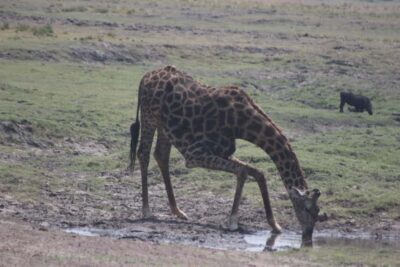
Chobe Day Trip – From Vic Falls – With Lunch (Buffet)
Read our review →Browse the lists this tour appears in