
Reviewed · VICTORIA FALLS
Khami Ruins Day Trip
Khami Ruins gives you a close look at Zimbabwe’s second-largest stone-built monument, a sprawling 16th-century capital made from carefully laid dry-stone walls. The site links the era of Great Zimbabwe with later Zimbabwean kingdoms, and its undisturbed archaeological layers make it unusually important for understanding the country’s past.
I like the easy access from Bulawayo and the private setup, which lets you take time at the Hill Complex, Vlei, Monolith, and Passage platforms. I also like that the tour includes air-conditioned transport, snacks, and bottled water. The main drawback is that admission fees and taxes are not included in the $80 price, so confirm those extra costs before you go.
Key points to know before you book
- A 16th-century Torwa capital: See the former seat of the Torwa Dynasty, not simply a few isolated stone walls.
- A private three-hour outing: Your group travels alone, with pickup offered and no shared coach schedule to follow.
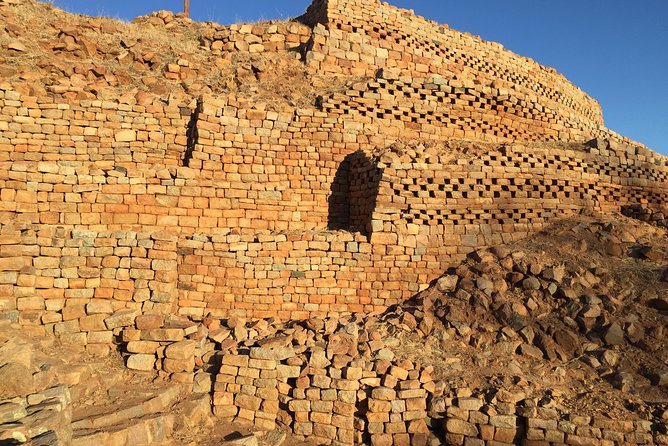
- Detailed dry-stone work: Look for chevron and chequered wall patterns, galleries, passageways, and granite-built platforms.
- Close to Bulawayo: The ruins are about 30 minutes from central Bulawayo, making this a practical half-day visit.
- A guide-led archaeological visit: Lesley has provided hotel pickup and guiding, while an on-site local guide can explain the structures.
- Check the extra charges: The $80 price includes transport, snacks, and water, but admission fees and taxes are separate.
Why Khami Ruins deserves your half-day
Khami is not just a stop for people who have already seen Great Zimbabwe. It helps you understand what came after it. The site was the 16th-century capital of the Torwa Dynasty, and its position links the story of Great Zimbabwe with the later Zimbabwe period.
That connection gives the ruins unusual value. You are not looking at a single preserved building. You are tracing how a major settlement was organized, where its chief lived, how ordinary people were housed, and how stone walls divided the site.
The ruins were also not stripped by treasure hunters. That matters because the archaeological layers remain undisturbed. In plain terms, researchers can learn more from the placement and sequence of the structures than they could from a site that had been repeatedly searched and damaged.
I would choose Khami if you like places that reward careful looking. The site may not offer the same instant scale as Great Zimbabwe, but its walls, paths, platforms, and building patterns give you plenty to study.
A few more things to do in Zimbabwe worth a look
- Victoria Falls: Chobe National Park Day Trip with Lunch
★ 4.7 · 518 reviews - Chobe Day Trip from Victoria Falls, Zimbabwe
★ 4.6 · 250 reviews - Chobe Day Trip From Victoria Falls Zimbabwe
★ 4.5 · 196 reviews
The 30-minute ride from Bulawayo

The tour includes pickup and private transportation in an air-conditioned vehicle. Khami is about 30 minutes from central Bulawayo, so you do not lose most of the day getting there and back.
That short transfer makes the excursion easy to fit into a Bulawayo stay. You can expect the full outing to last about two to four hours, with roughly three hours at the ruins. The timing leaves room for a proper walk and explanation without turning the visit into a full-day commitment.
Lesley has handled hotel pickup and guiding for this experience. That is useful if you want the morning or afternoon to run simply, with one person responsible for the road transfer and the main explanation.
The private format is another practical advantage. Only your group takes part, so you can ask about a wall pattern, pause for photographs, or spend more time on a particular structure without waiting for a large group to catch up.
Still, check the pickup details when booking. The information confirms that pickup is offered, but it does not specify every hotel, pickup time, or exact route. Confirmation is provided when you book.
Entering the former Torwa capital
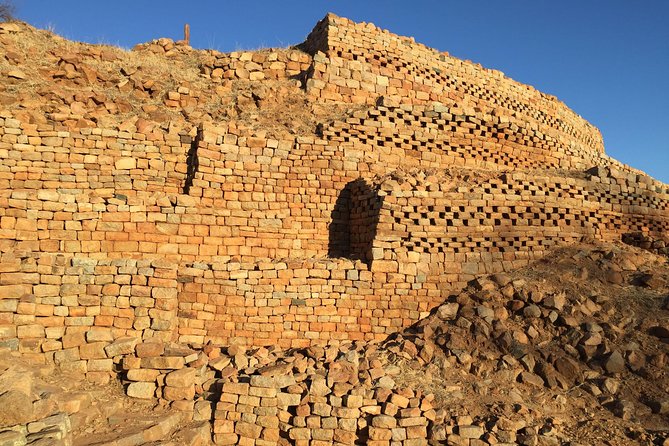
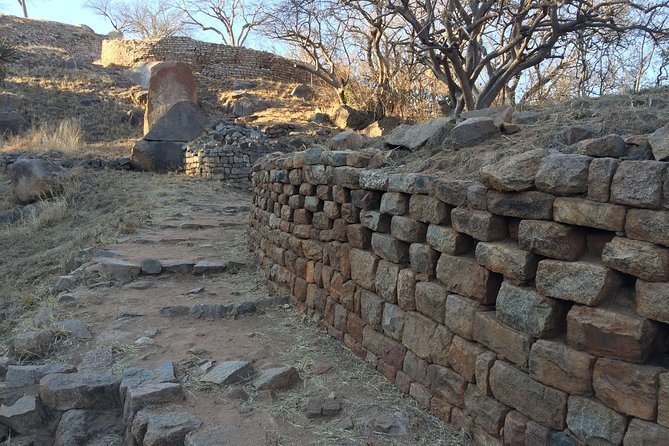
Your main stop is Khami Ruins, an archaeological site spread across a series of stone-built platforms. The structures were made with dry-stone construction, meaning the walls depend on carefully placed stones rather than mortar.
This method makes the workmanship especially easy to appreciate. Look closely at the alignment and decoration rather than treating the walls as simple piles of rock. The site includes chevron and chequered designs, two patterns that give the walls a finished and deliberate appearance.
You will also see narrow passageways and perambulatory galleries. These routes help show that Khami was planned as a working settlement, not only a ceremonial place. The walls guided movement around the platforms and created separate areas within the larger complex.
The guide’s role is important here. Without explanation, some of the structures can be hard to read. A good guide helps you connect a low wall or raised platform with the larger plan of the settlement, then points out what is known and what remains a matter for archaeological study.
The Hill Complex and the chief’s residence
The Hill Complex is one of the most important parts of the visit. It contained the chief’s residence, known as the Mambo. From here, the site’s layout begins to make more sense because you can consider the difference between the ruler’s area and the spaces used by the wider population.
Do not rush through this section. The Hill Complex is where the political importance of Khami becomes clearest. You are seeing the center of power for the Torwa Dynasty, not merely an attractive example of stonework.
The information provided does not promise a particular view, museum display, or reconstructed interior, so go with the expectation of surviving platforms and walls rather than a furnished palace. The value lies in the remains and in the explanation that places them in context.
If you are interested in archaeology, this part may be the strongest reason to book a guided visit. The stones alone show skill, but the guide can help you understand how the chief’s residence fitted into the wider settlement.
Same base, a different sort of day:
- Helicopter Scenic Flight over Victoria Falls 12-13 minutes Flight
★ 5.0 · 1,391 reviews - Victoria Falls: Dinner Cruise on the Zambezi River
★ 4.9 · 925 reviews - Dinner Cruise on the Zambezi River
★ 5.0 · 518 reviews - Victoria Falls: Boma Dinner and Drum Show
★ 4.4 · 415 reviews
Vlei, Monolith, and Passage platforms
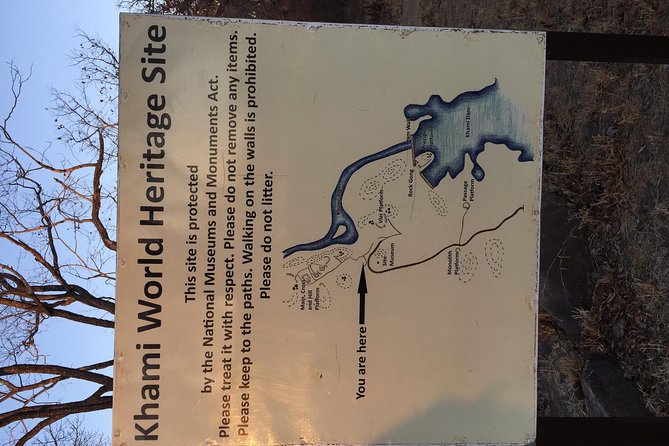
The complex includes the Vlei, Monolith, and Passage platforms. Each adds another piece to the story of how Khami was built and used.
The names also help break the visit into manageable sections. Instead of walking through one large area with no clear structure, you can follow the site’s different platforms and compare their walls, access routes, and decorative details.
The Passage platforms are particularly useful for noticing the narrow routes and galleries that run through or beside the stonework. The Monolith platform adds another distinct area to inspect. The Vlei platform helps show the range of construction across the complex.
I would bring patience here. This is not a quick photo stop. A complete tour covering the buildings and structures can take about three hours, and that time is justified if you want to see more than the most obvious walls.
Daga huts and the people who lived at Khami
The stone walls tend to attract the most attention, but the settlement also included daga huts. These were made from cobwork and were used by the wider population.
That detail keeps the visit from becoming only a story about chiefs and monumental construction. The site reflects different levels of life, from the Mambo’s residence on the Hill Complex to the homes of the people who lived around the walled areas.
The huts may not survive in the same form as the stone structures. You should expect archaeological remains and site interpretation rather than a fully rebuilt village. Even so, the contrast between the granite walls and the daga construction helps you picture how the settlement worked.
This is one reason I prefer visiting with a guide. A guide can draw your attention to the relationship between the surviving stonework and the less permanent buildings that once filled the spaces around it.
Why the undisturbed archaeology matters
Khami’s importance is not based only on size. It is also one of the few Zimbabwean sites that escaped destruction by treasure hunters.
That preserved stratigraphy gives archaeologists a clearer record. Layers in an archaeological site can show how a place changed over time, and undisturbed layers are far more useful than a site that has been dug through without records.
You do not need specialist training to appreciate this. It simply means that the walls and ground remain part of a larger record. The position of a structure, the way a platform relates to another platform, and the material found in different layers can all add information.
If you enjoy history that comes from physical evidence, Khami is a strong choice. If you want dramatic reconstruction, theatrical displays, or a large museum collection, this outing may feel quieter and more demanding.
A private tour with practical comforts
The tour is priced at $80 per person. That includes an air-conditioned vehicle, private transportation, snacks, and bottled water.
I see the value mainly in the private transport and guide time. You are not paying only for entry to the ruins. You are paying for a half-day transfer from Bulawayo, a dedicated vehicle, and a visit that can be shaped around your group’s pace.
The snacks and water are small but useful additions, especially during a warm outdoor archaeological visit. The air conditioning also matters on the drive to and from the site.
Admission tickets and all fees and taxes are not included. This is the key price detail to clarify before booking. Ask for the current admission cost and the total amount payable so the $80 price does not become a surprise at the entrance.
Group discounts are offered, though the details are not specified. If you are traveling with several people, ask how the discount applies. Since the activity is private, it may work well for families, couples, friends, or a small history-focused group.
Who will get the most from this visit
I would recommend Khami to you if you are staying in Bulawayo and want a meaningful archaeological outing without committing to a full day on the road.
It suits people who like:
- Archaeology and historic building methods
- Guided walks with time for questions
- UNESCO World Heritage Sites
- Dry-stone walls and ancient settlement plans
- Private tours rather than large group excursions
- A short trip with transport arranged
It may be less suitable if you want a fast sightseeing stop or an attraction with many modern facilities. The experience centers on outdoor ruins, historical explanation, and close observation of stonework.
Most people can participate, according to the tour information. No special fitness requirement is stated, but the visit involves seeing an archaeological complex rather than remaining in a vehicle. Ask the operator about the walking conditions if you have mobility concerns, since specific accessibility details are not provided.
Booking timing, weather, and cancellation
This experience is booked about 17 days ahead on average. That is a useful planning signal, especially if your Bulawayo schedule is fixed. I would reserve before arrival rather than assume a last-minute place will be available.
You receive confirmation at the time of booking, and a mobile ticket is available. Free cancellation applies if you cancel at least 24 hours before the start time. Changes or cancellations inside that 24-hour window are not accepted and are not refunded.
The trip requires good weather. If poor weather causes cancellation, you can choose another date or receive a full refund. The same choice applies if the minimum number of participants is not reached.
Should you book the Khami Ruins day trip?
Book it if you want to see an important Zimbabwean archaeological site with transport and guiding arranged from Bulawayo. The private format, short drive, air-conditioned vehicle, and roughly three-hour site visit make it an efficient choice.
The strongest reason to go is the detail: the Hill Complex, Torwa capital, dry-stone platforms, decorative walls, galleries, passageways, and evidence of ordinary homes. Lesley can provide hotel pickup and guiding, while an on-site local guide may add more explanation at the ruins.
Before paying, confirm the pickup point, admission fee, taxes, and weather arrangements. If you are comfortable with an outdoor site and prefer real remains over polished reconstruction, Khami is well worth your half-day.
FAQ
Where is Khami Ruins located?
Khami Ruins is in Zimbabwe, about 30 minutes by car from central Bulawayo.
How long does the tour last?
The experience takes about two to four hours, with the main visit to Khami Ruins lasting approximately three hours.
What is the price?
The listed price is $80 per person.
Is hotel pickup available?
Yes. Pickup is offered, and hotel pickup has been provided for this experience.
Is the tour private?
Yes. Only your group takes part in the activity.
What transportation is included?
The tour includes private transportation in an air-conditioned vehicle.
Are snacks and water provided?
Yes. Snacks and bottled water are included.
Are admission fees included?
No. Admission tickets, fees, and taxes are not included in the listed price.
Who was based at Khami Ruins?
Khami was the 16th-century capital of the Torwa Dynasty. The chief’s residence, known as the Mambo, was located on the Hill Complex.
What happens if bad weather cancels the tour?
You can be offered a different date or receive a full refund if poor weather causes the experience to be canceled.
Just added in Zimbabwe
- Zambezi National Park Private Wildlife Safari (4 – 10 hours)★ 4.9 · 9 reviews
- Victoria Falls: Zambezi River White Water Rafting Experience★ 5.0 · 7 reviews
- Zambezi River: Kid-Friendly Whitewater Rafting★ 5.0 · 3 reviews
- Zimbabwe: Sundowner Cruise (Standard) Zambezi River★ 4.8 · 5 reviews
- Victoria Falls: Village Tour with Traditional Food Tasting★ 4.0 · 3 reviews
- Zambezi 3hr Game Drive★ 4.6 · 5 reviews
- Victoria Falls Village Cultural Tour – Authentic Experience★ 5.0 · 3 reviews
- Victoria Falls: Vulture Safari and Bush Walk★ 5.0 · 5 reviews