Reviewed · GREAT ZIMBABWE RUINS TOURS
Great Zimbabwe
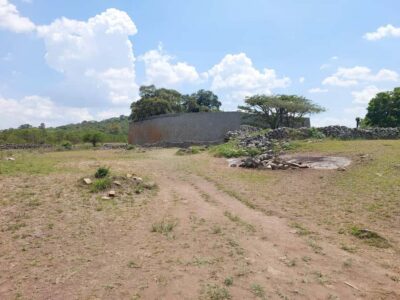
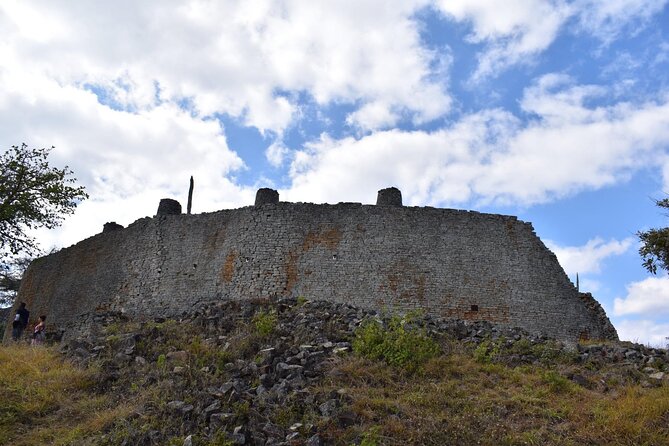
Great Zimbabwe is not a scattered pile of old stones. It is the remains of a major African city, founded in the 9th century and built from carefully fitted dry stone. The Great Enclosure, hill complex, and valley ruins give you a clear sense of the city’s scale and the skill of its Shona builders.
I like the personal feel of a group capped at eight, and I like that the day includes more than a ruin walk. You also get a museum visit, Zimbabwean food, and Mbira music at a cultural village. The drawback is the long road trip, often about four to four and a half hours each way from the pickup area, so this is a full, tiring day.
Key points to know before booking
- A full-day archaeological journey: Plan on about 12 hours, with a 6:00 am start and a long drive to the site.
- Three major ruin areas: The visit covers the Great Enclosure, hill complex, and valley ruins.
- A small group setting: The tour accepts no more than eight people, and some departures may feel nearly private.
- Cultural details beyond the walls: Look for original Zimbabwe bird carvings, Chevron patterns, and a Mbira music session.
- Food is part of the day: A late breakfast or brunch is provided before the guided tour, followed by a hearty Zimbabwean lunch or picnic barbecue.
- Pack for sun and uneven walking: Closed-toe shoes, a hat, sunglasses, sunscreen, and insect repellent are sensible essentials.
Why Great Zimbabwe deserves a place on your itinerary
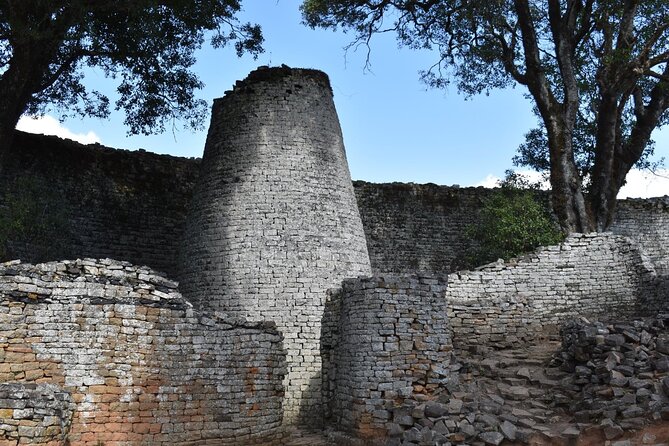
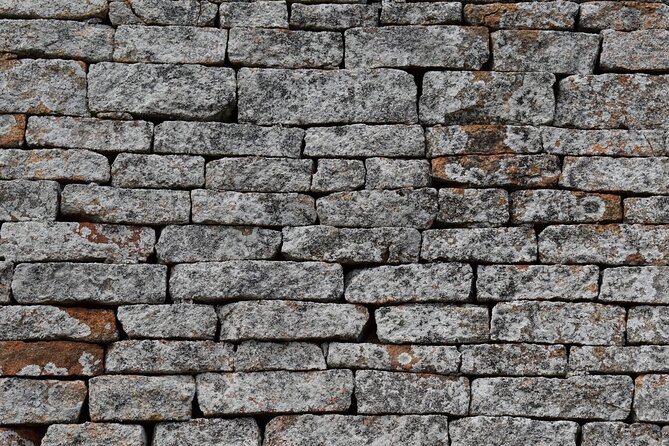
Great Zimbabwe is one of those places that changes how you think about southern African history. The site was a large city founded in the 9th century, and its dry-stone construction required no mortar. Walls, passages, and enclosures were built by stacking and fitting granite stones with care.
The scale matters. These are not small household remains. The ruins point to a powerful state with organized labor, skilled builders, trade, and a culture capable of creating a major center in stone. The site is often described as second only to Egypt’s pyramids in size among major ancient African monuments.
You will not understand that scale from a quick photograph. The walls are the point. As you walk beside them and see how much stone was used, the city’s former importance becomes easier to grasp. A guide adds useful context by explaining how the separate sections relate to one another and what the structures reveal about the ancestral Shona people.
Great Zimbabwe is also Zimbabwe’s cultural heartland. That gives the visit weight beyond archaeology. You are not simply looking at old masonry. You are visiting a national symbol and a UNESCO World Heritage Site tied closely to the country’s identity.
More heritage trips from Zimbabwe:
- Great Zimbabwe Tour from Harare
★ 5.0 · 6 reviews - MASVINGO; GREAT ZIMBABWE MONUMENT TOUR – FROM HARARE
★ 5.0 · 4 reviews - Great Zimbabwe: The World’s View Historical Site !!
★ 5.0 · 4 reviews
The 6:00 am start and long road to the ruins
The day begins early, at 6:00 am, with pickup offered from your accommodation. That early start is practical because the excursion lasts about 12 hours. The road journey can take roughly four hours, and one account describes a four and a half hour drive each way.
That is the main issue to consider before you pay the $260 per person price. You will spend a large part of the day in the vehicle. If you dislike long drives, Great Zimbabwe may be better handled with an overnight stay nearby rather than as a day trip. This particular experience is built for people who want to see the site even when time is limited.
The small group helps. The maximum is eight people, and one departure was handled as a two-person trip with guide and driver Blessing. That kind of arrangement gives you more room to ask questions, adjust the pace, and enjoy the road without a crowded coach.
The drive also makes the early breakfast timing useful. A late breakfast or brunch is provided when you arrive, before the guided visit. It breaks up the journey and means you do not need to rely on finding food along the way.
Breakfast first, then a guided walk through the city
The included meal is more than a minor extra. After a very early start and hours on the road, a proper breakfast or brunch gives you a chance to eat before walking around the ruins. The exact timing is described as a late breakfast, so do not expect a dawn meal before pickup.
The guided tour of Great Zimbabwe takes about two hours. That is enough time to cover the main areas without reducing the visit to a rushed photo stop. Your guide explains the site as you move through it, helping you connect walls, enclosures, and open areas with the city that once occupied them.
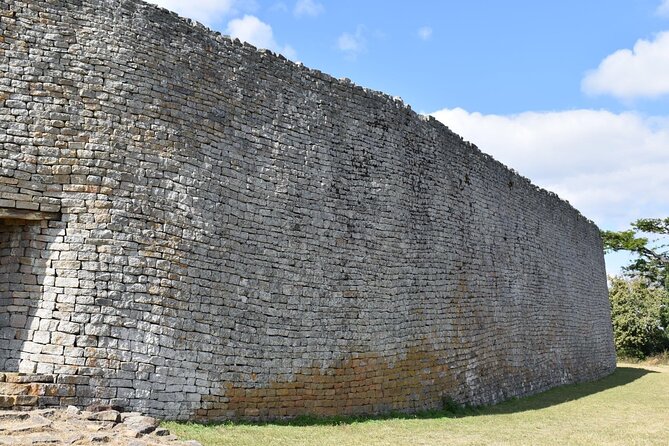
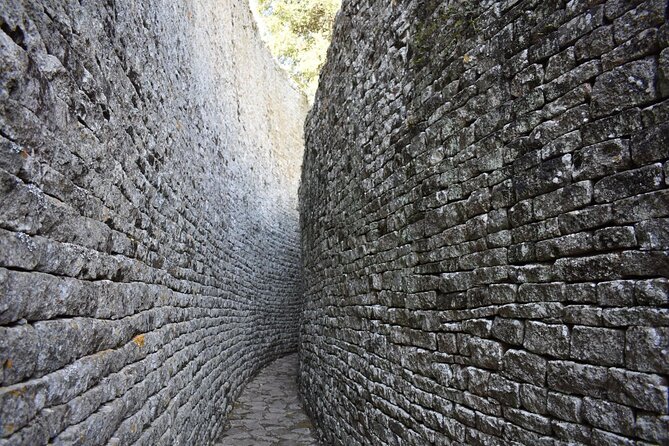
The ruins are made entirely from freestanding dry stone walls and structures. You will see how the stones hold together without mortar, and you will notice that the builders relied on shape, weight, and careful placement. The result is both practical and striking.
Bring closed-toe walking shoes. The advice is especially useful because the visit involves walking among ancient stone structures, and firm footwear is more comfortable than sandals. A hat, sunglasses, sunscreen, and insect repellent also belong in your day bag.
The Great Enclosure and its careful stonework
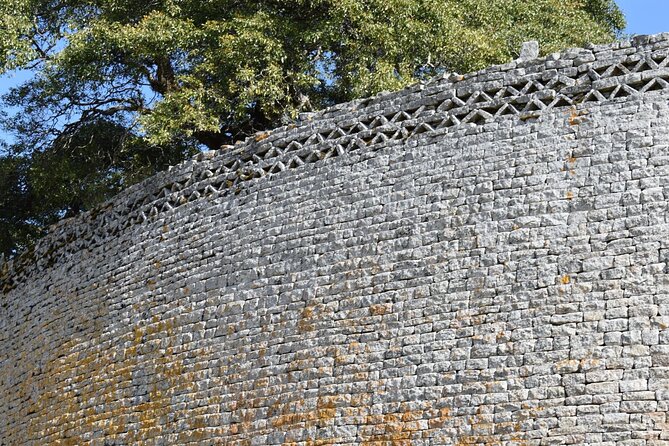
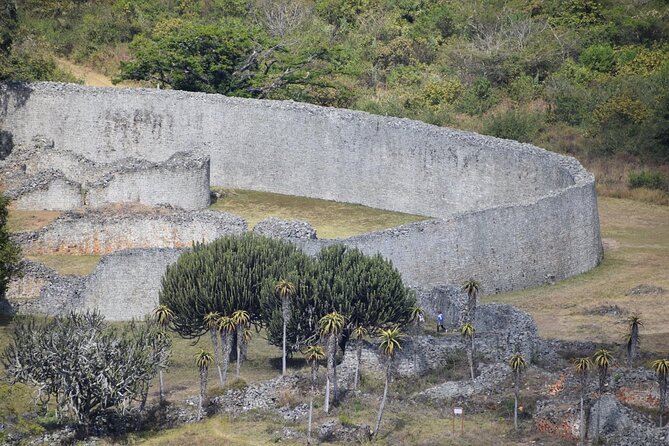
The Great Enclosure is the best-known section of Great Zimbabwe and one of the main reasons to make the journey. Its broad walls show the ambition of the city’s builders. The enclosure is not impressive only because it is old. It is impressive because so much stone was shaped, carried, and placed to create a large architectural space.
Look closely at the wall patterns. The original Chevron designs are a memorable feature, with repeated angular forms worked into the stonework. These patterns carry symbolic meaning connected with fertility. A guide can help you notice details that are easy to miss if you simply walk around the outside.
The enclosure also gives you a useful sense of how design and symbolism worked together. The walls were functional, but they were not plain. Their patterns added meaning and helped express the beliefs of the society that built them.
You should allow yourself time to look rather than rush from one viewpoint to the next. The site rewards close attention to construction. The stones are not decorated in the manner of a grand Egyptian temple, yet the scale and precision create their own force.
Same base, a different sort of day:
- Helicopter Scenic Flight over Victoria Falls 12-13 minutes Flight
★ 5.0 · 1,391 reviews - Victoria Falls: Dinner Cruise on the Zambezi River
★ 4.9 · 925 reviews - Victoria Falls: Chobe National Park Day Trip with Lunch
★ 4.7 · 518 reviews - Dinner Cruise on the Zambezi River
★ 5.0 · 518 reviews
The hill complex and valley ruins
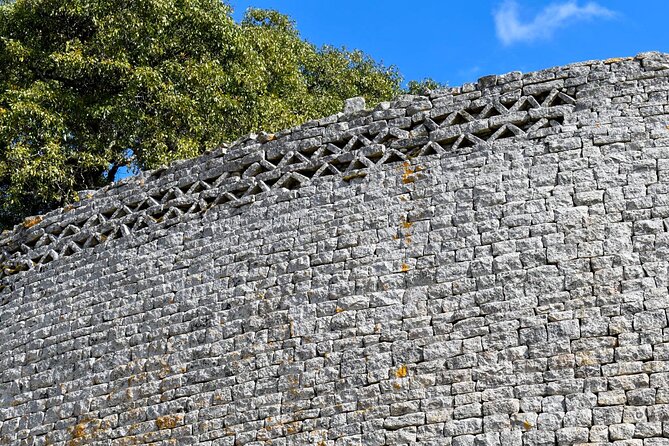
The hill complex adds another layer to the visit. Great Zimbabwe is not one single enclosure that you see and leave. The city spread across several areas, and the hill complex helps you understand that the settlement had different zones and functions.
The valley ruins complete the picture. Together, the Great Enclosure, hill complex, and valley ruins show a large urban center rather than an isolated ceremonial structure. I find that this wider layout is one of the most valuable parts of having a guide. Without context, separate walls can blur together. With an explanation, the site begins to read as a city.
The tour description also points out that you may have the attraction largely to yourself. That is not guaranteed at every departure, but it is a useful possibility. A quieter visit makes it easier to hear the guide and spend time with the masonry without constant crowd noise.
Hot conditions are possible, so do not underestimate the sun. A hat and water are sensible, and sunscreen should be applied before you begin walking. Rainy-season conditions can also affect comfort, which is why a light jacket and sturdy shoes may be useful at that time of year.
Zimbabwe’s bird carvings in the museum
The small museum adds an indoor stop to the outdoor ruins. Its most important objects are original stone carvings of Zimbabwean birds. These sculptures are among the best-known symbols connected with Great Zimbabwe and help link the archaeological site with modern Zimbabwean identity.
The museum is not a substitute for the ruins. It works as a compact companion, giving you objects to examine after seeing the larger stone structures in place. The bird carvings also show that the culture expressed itself through portable sculpture as well as monumental walls.
Allow time to listen to the explanation here. The museum is described as small, so it is unlikely to take as long as the main walking tour. That is a benefit on a long day. You get another form of cultural evidence without adding a major extra stop.
Mbira music and the cultural village
The experience continues at a cultural village, where you hear traditional Mbira music. The Mbira has been used as an important part of daily life and as a way to communicate with higher spirits.
This gives the excursion a living cultural element. The ruins show the skill and power of an earlier society, while the music helps you connect with traditions that are still meaningful. It is a useful contrast to a standard archaeological tour that ends at the last stone wall.
Expect this part of the day to feel different from the guided walk. The site visit is focused on architecture and the past. The cultural village brings sound, performance, and belief into the picture. If you want an excursion built only around archaeology, this extra stop may feel less central. If you want a broader view of Zimbabwean culture, it adds real value.
A Zimbabwean lunch after the ruins
After the main visit, you receive a hearty Zimbabwean lunch, described as a picnic barbecue. Food can make a long excursion much easier, especially after several hours of travel and walking in the heat.
The meal is also part of the cultural experience rather than just a practical refill. You are given a chance to pause and enjoy Zimbabwean food in the setting of the day’s visit. Since the exact menu is not specified, you should not book this expecting a particular dish.
The lunch comes at the right point in the schedule. The day starts early, breakfast arrives late, and the walking tour takes about two hours. A substantial meal afterward helps prevent the return drive from becoming an uncomfortable slog.
Is $260 good value for this Great Zimbabwe day trip?
At $260 per person, this is not a cheap sightseeing add-on. The value depends mainly on where you are staying and how much you would spend arranging the day yourself.
The price covers pickup, transport, a small-group experience, guiding, breakfast or brunch, lunch, and the cultural stops. It also saves you from arranging a long-distance visit to one of Zimbabwe’s most important sites on your own. For a group of up to eight, the service is much more personal than a large bus outing.
The price feels easier to justify if Great Zimbabwe is high on your list and you have limited time. The site is far enough away that transport is not a minor detail. You are paying for access to the ruins and for the full day of getting there, being shown around, fed, and returned.
The value is weaker if you are already staying close to Great Zimbabwe or can arrange a shorter local visit at a lower cost. In that case, the long round-trip drive may not make sense. Compare the price with the time you have available, not just with the entrance cost of the ruins.
The booking pattern suggests that this experience is often reserved about three weeks ahead. That is worth noting if your dates are fixed, though the group limit may also make availability tighter than for a large coach tour.
Who will enjoy this experience most?
I would recommend this trip to anyone who wants Great Zimbabwe explained, not merely photographed. The guide-led format makes the site easier to understand, especially if you are not already familiar with Shona history and culture.
It also suits you if you prefer a small group. A maximum of eight creates the possibility of a relaxed outing, and the experience can feel nearly private when only a few people book. The flexible attention is particularly useful at a place with several separate ruin areas.
The trip is a good fit for people interested in architecture, archaeology, African history, and cultural traditions. The combination of stone walls, bird carvings, Mbira music, and local food gives the day more range than a simple monument visit.
I would hesitate to recommend it to anyone who cannot handle a long road journey. The four to four and a half hour drive each way is the central trade-off. You should also be comfortable walking outdoors in sun and possible rain.
Most people can participate, and service animals are allowed. The tour is near public transportation, although pickup is offered and the day begins at 6:00 am. The experience requires good weather. If poor weather forces cancellation, you can choose another date or receive a full refund.
What to pack for the 12-hour outing
Keep your packing simple and practical:
- Closed-toe walking shoes for the ruins
- A hat and sunglasses for strong sun
- Sunscreen
- Insect repellent
- A light jacket, especially during the rainy season
- Comfortable clothing for a long day outdoors and in the vehicle
The included food means you do not need to plan the day around buying meals, but it is still sensible to carry water and any personal snacks you need. The site visit lasts about two hours, yet the full outing lasts roughly 12 hours because of the road time.
Should you book the Great Zimbabwe tour?
Book it if you want a guided, culturally broad visit to one of Zimbabwe’s defining places and you can accept the long drive. The strongest features are the small group, the clear focus on the Great Enclosure and other ruin areas, the museum’s bird carvings, the Mbira music, and the included meals.
Think twice if you want a quick excursion or dislike spending most of a day in a vehicle. The $260 price is easiest to defend when transport would otherwise be difficult and your schedule gives you only one day for Great Zimbabwe.
For the right visitor, this is a serious but rewarding day: early pickup, long road, two hours among remarkable stone walls, then food and music that connect the ruins with Zimbabwe today.
FAQ
Where is this Great Zimbabwe tour located?
The experience takes place at Great Zimbabwe in Zimbabwe.
What time does the tour start?
Pickup and the tour day begin at 6:00 am.
How long does the experience last?
The full experience lasts approximately 12 hours.
How much does the tour cost?
The listed price is $260 per person.
How many people can join the tour?
The tour has a maximum group size of eight people.
Is pickup available?
Yes, pickup is offered.
How long is the drive to Great Zimbabwe?
The drive can take about four to four and a half hours each way, depending on the pickup location.
What sites are included at Great Zimbabwe?
The visit includes the Great Enclosure, hill complex, and valley ruins.
Is food included?
Yes. A late breakfast or brunch is provided, followed by a hearty Zimbabwean lunch or picnic barbecue.
What should I bring?
Bring closed-toe walking shoes, a hat, sunglasses, sunscreen, and insect repellent. A jacket may also be useful during the rainy season.
Just added in Zimbabwe
- 3 Days Victoria Falls and Full day Chobe National Park★ 3.2 · 3 reviews
- Star Gazing Victoria Falls★ 5.0 · 3 reviews
- Bungee Jumping at The Victoria Falls Bridge★ 5.0 · 7 reviews
- 2 Hour Stargazing Tour in Victoria Falls NP Area in 4×4★ 5.0 · 3 reviews
- Shearwater Bungee Jump Victoria Falls Bridge★ 5.0 · 3 reviews
- Victoria Falls: Devil’s Pool High Tea★ 4.0 · 6 reviews
- From Victoria Falls: Zimbabwe Traditional Village Tour★ 4.5 · 57 reviews
- Great Zimbabwe: The World’s View Historical Site !!★ 5.0 · 4 reviews
Great Zimbabwe Ruins Tours, compared.
Great Zimbabwe: The World’s View Historical Site !!
Read our review →