
Reviewed · MATOBO NATIONAL PARK TOURS
Matobo Rhino Encounter
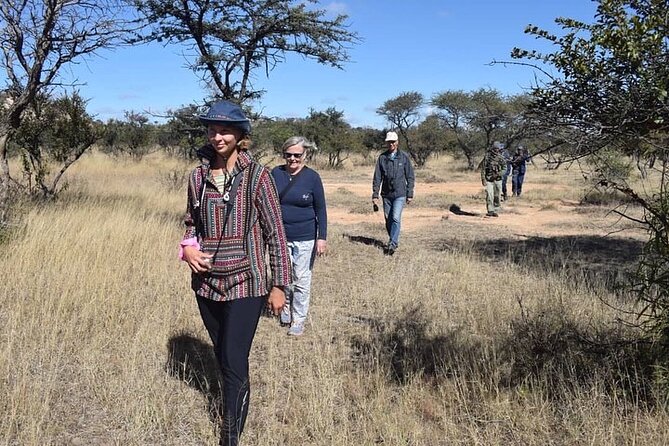
The best part of the Matobo Rhino Encounter is the chance to approach white rhinos on foot with a guide and park rangers nearby. This is not a drive-by wildlife stop. You walk through the bush, read signs left by animals, and learn how wind direction affects a rhino encounter.
I like the small maximum of eight people, which gives you room to hear the guide and ask questions. I also like the mix of wildlife and human history: medicinal plants, ancient survival skills, and a cave decorated with thousands-year-old paintings. The main drawback is the timing. With a 1:00 pm start and a five-to-six-hour schedule, this is an afternoon outing, not an early wildlife drive.
Key points to know before you book
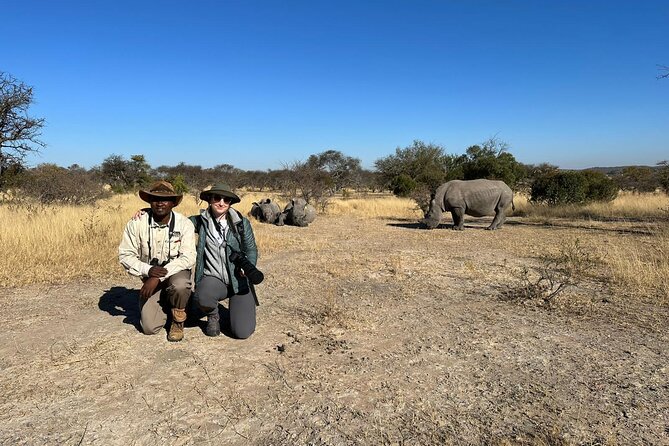
- White rhinos are approached on foot: The central experience is tracking and watching rhinos in their natural habitat with local guides and park rangers.
- Groups are capped at eight: A small party makes it easier to follow explanations and move quietly through the bush.
- The tour teaches practical bush skills: You learn to read footprints and dung, identify medicinal plants, and understand how people once survived in this dry setting.
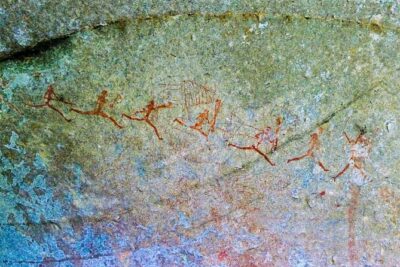
- Ancient rock art adds cultural depth: A large cave contains San paintings believed to be thousands of years old.
- Lunch and refreshments are covered: Expect a barbecue lunch, bottled water, snacks, digital photos, and sunset drinks.
- Pickup simplifies the day: Hotel transfers are offered, and the park is about a 30-minute drive from one reported pickup point.
Walking toward Matobo’s white rhinos
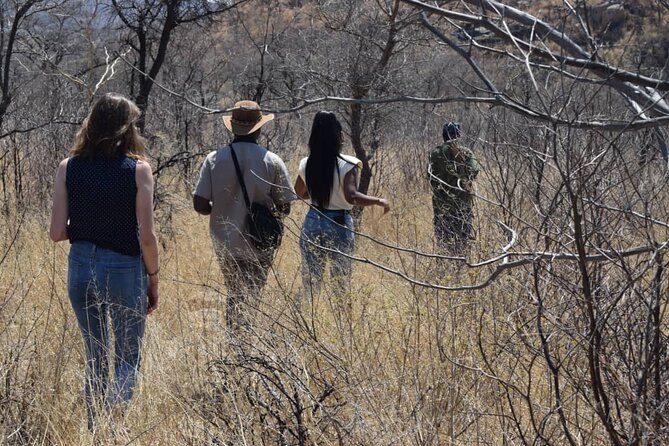
This outing gives you a different kind of wildlife encounter. Instead of sitting in a vehicle and waiting for an animal to appear, you follow signs through the bush. Your guide watches the wind, reads tracks, and explains how rhinos behave before bringing you close.
That foot-based approach matters. You notice details that are easy to miss from a safari vehicle: prints pressed into the soil, broken vegetation, smells in the air, and animal dung that can reveal what passed through the area. The guide also helps you understand how the dry savannah works as a living system.
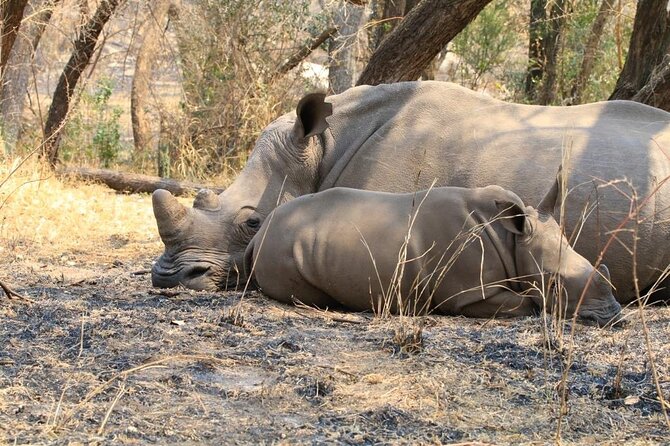
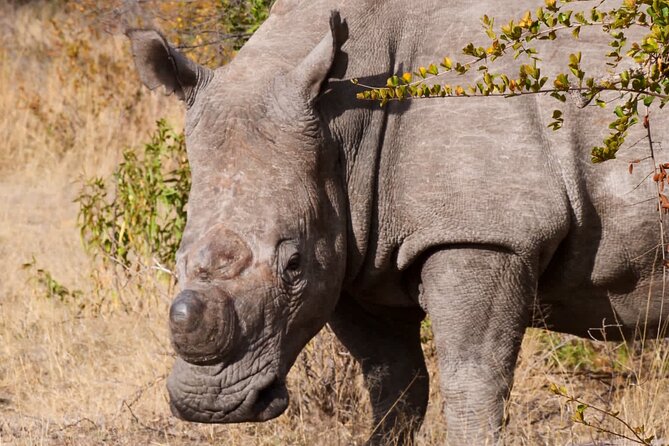
The central attraction is the white rhino. The exact sighting depends on animal movements, so no responsible operator can promise a fixed distance or a set number of animals. Still, the experience is designed around finding rhinos rather than treating them as a lucky extra.
A reported encounter lasted about 25 minutes, with time for photographs and video. That is a useful benchmark, though your own sighting could be shorter or longer. Keep your camera ready, but do not let filming distract you from the animal in front of you.
Park rangers play an important role here. These endangered animals need protection, and meeting the people who guard them adds weight to the encounter. You get a closer look at the work behind wildlife conservation, not just the polished safari moment.
Other Matobo trips from Zimbabwe:
- The Best of Matobo
★ 5.0 · 39 reviews - Matobo Hills Day Trip with Rhino Tracking
★ 5.0 · 22 reviews - Matopos Half Day Excursion
★ 4.5 · 15 reviews
The value of a small group of eight
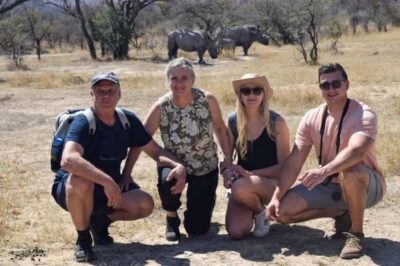
The group limit is one of the strongest features of this experience. Eight people is still enough to share the excitement, but it is small enough that the walk should feel more personal than a large bus tour.
A smaller group also helps in the bush. Quiet movement matters when you are tracking animals. It is easier for everyone to stop, listen, and follow a guide’s hand signal when there are fewer voices and fewer bodies shifting around.
You should also have a better chance to ask about the things that interest you. One person may want to know how rhinos react to wind. Another may care more about plant remedies or the meaning of the rock paintings. A small party gives the guide room to handle both.
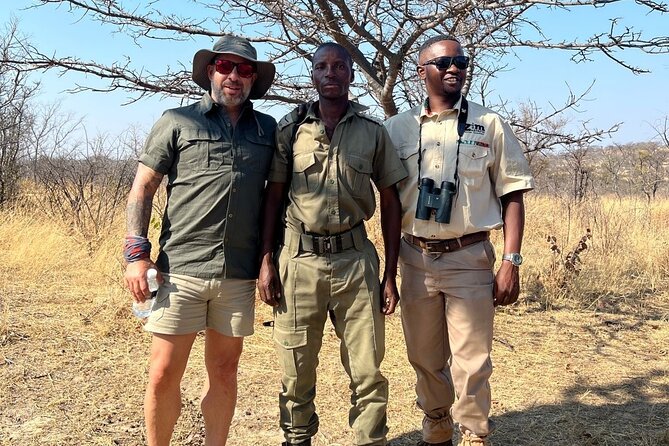
Blessing and Bongani are named as guides connected with this experience. They are described as friendly and efficient, and the local guide and park rangers work together during the rhino portion. If you are comparing outings in the Matobo area, having identifiable local guides is a useful sign that the experience is built around people who know the park directly.
What the bush walk teaches you
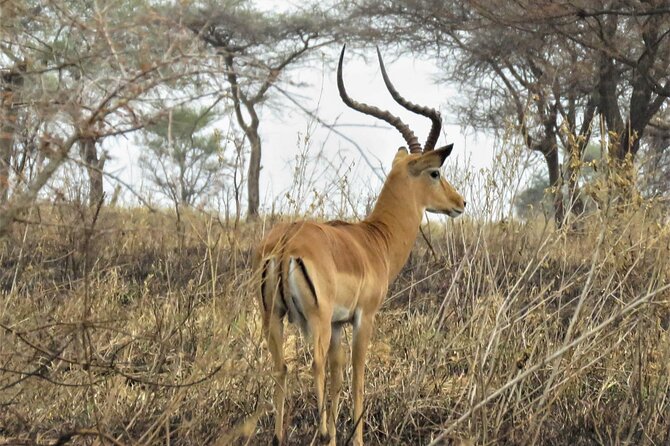
The walk is not only about spotting a large animal. It is also a lesson in reading the ground.
You learn to identify footprints and animal dung. That may sound basic, but it is one of the best ways to understand how tracking works. Dung can show what an animal has eaten and how recently it passed. Footprints can point toward water, shelter, or feeding areas. The guide explains these clues in the setting where they actually matter.
The program also covers medicinal plants. You are introduced to natural remedies, including traditional ways of dealing with snake bites. This section connects the park to the survival methods used by earlier communities, who had to make use of what they could find around them.
The experience presents these techniques as part of an older way of living in a difficult environment. You are not simply collecting facts for a quiz. You are seeing how plants, animals, rocks, weather, and human survival fit together.
Expect an active outing. Comfortable closed-toe shoes are important, and khaki clothing, a sun hat, sunscreen, and insect repellent are advised. You will be outdoors for much of the afternoon, so practical clothing matters more than safari fashion.
Ancient paintings inside a Matobo cave
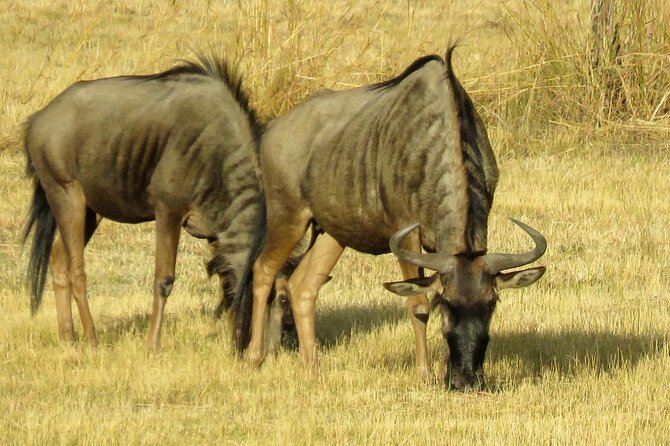
The cave visit gives the day a welcome change of pace. After tracking animals, you see evidence of people who used this area thousands of years ago.
The cave is described as one of the largest rock caves in the park and contains ancient bushman, or San, paintings. These images are not a decorative backdrop for the rhino encounter. They connect the park to a much longer human story.
Your guide can help you look at the paintings as part of the place rather than as isolated marks on stone. The same broad area that now protects rhinos also offered shelter and meaning to earlier people. That contrast makes the cave stop especially worthwhile.
Conditions inside the cave are not described in detail, so bring the same practical mindset you use for the walk. Closed shoes remain the sensible choice. If photography matters to you, ask the guide about the best way to capture the paintings without damaging the site.
One point deserves care: a separate account of a Matobo outing also mentions the Cecil Rhodes grave site. Since that stop is not clearly listed as part of this specific rhino encounter, do not book this tour expecting the grave visit unless the operator confirms it directly.
Other wildlife encounters in Zimbabwe:
- From Kasane: Chobe National Park Full Day Wildlife Safari
★ 4.6 · 71 reviews - Lion & Wildlife Sanctuary Excursion Victoria Falls
★ 4.5 · 31 reviews - Sunset Cruise Wildlife Watching Experience at Zambezi River
★ 5.0 · 21 reviews - Guided Tour of the Falls (ZIM side) Wildlife Safari, by Savannah
★ 5.0 · 19 reviews
Lunch, photographs, and the late-afternoon finish
A barbecue lunch is provided, along with bottled water and refreshments. This is useful because the schedule takes up most of the afternoon, and you will be walking in the open rather than moving between cafés.
The meal also gives the group a chance to pause. A wildlife walk can involve long periods of careful observation, followed by a burst of action when an animal appears. A simple barbecue helps break up that rhythm.
Digital photos are included, which is a practical bonus if you want to stay focused during the encounter. You should still bring your own camera or phone if you want personal video clips. One participant used the rhino sighting for photographs and YouTube footage, so the opportunity can suit people who want more than a few quick snapshots.
The day ends with sunset, snacks, and sundowners. This is a pleasant finish after the more alert work of tracking. It also gives you time to take in the changing light over Matobo without rushing straight back to a vehicle.
The afternoon start makes sense for this ending. You begin at 1:00 pm, visit the rhinos and cave, eat during the outing, and finish around sunset. The stated duration varies between approximately five hours and a six-hour description, so plan for a substantial half-day rather than a tightly timed excursion.
Pickup and the practical shape of the day
Hotel transfers are offered, and one account places the drive to Matobo National Park at roughly 30 minutes. Your exact transfer time depends on where you are staying, but pickup removes the need to arrange separate transport to the park.
The meeting time is 1:00 pm. Confirmation is provided when you book, and the experience is available by mobile ticket. It is also near public transportation, though pickup may be the easier choice if you are carrying water, sun protection, and camera gear.
The tour is listed at $120 per person. That price is easier to assess when you count what is included: transport, the guide, park access arrangements, the rhino tracking experience, ranger contact, lunch, bottled water, refreshments, digital photos, snacks, and sunset drinks.
For a standard sightseeing stop, that would be a high price. For a small-group wildlife walk with a maximum of eight people and several included elements, it is more defensible. The value depends on what you want from Matobo. If your priority is a private vehicle and repeated wildlife sightings, compare it with a dedicated safari drive. If you want to walk, learn tracking skills, meet rangers, and see rock art in the same outing, this package offers more variety.
Group discounts may be available, which could improve the cost for families or friends booking together. Ask for the current terms before paying, since the amount of any discount is not specified.
Who will enjoy this outing most
I would recommend this experience to you if you want an active wildlife visit rather than a passive ride. You should be comfortable walking outdoors, standing quietly, and accepting that animals follow their own schedule.
It also suits anyone who wants context. The plant knowledge, tracking lesson, cave paintings, and ranger contact give the day more substance than a single rhino sighting.
Photographers and short-form video makers may appreciate the time spent near the rhinos. The small group should make it easier to position yourself and hear instructions, though you still need to follow the guide’s directions around wildlife.
Families and mixed-age groups may find the subject matter appealing, but the supplied information only says that most people can participate. It does not provide a minimum age, detailed mobility guidance, or a precise walking distance. If anyone in your party has mobility concerns, confirm the route and cave access before booking.
This is less suitable if you dislike heat, insects, uneven ground, or the uncertainty of wildlife viewing. It is also not the right pick if your main aim is to see the greatest possible number of species. The program focuses on rhinos, bush skills, and cultural history.
Safety, respect, and what to pack
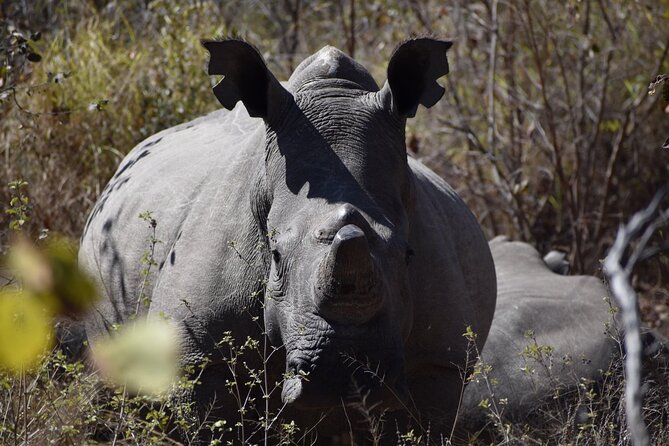
The rhino encounter should be treated as a serious wildlife experience. The guide watches behavior and wind direction, while rangers help protect both the animals and the people nearby. Follow instructions promptly, keep your voice low, and do not move toward an animal on your own.
Pack closed-toe walking shoes, khakis or other practical clothing, a sun hat, sunscreen, and bug spray. Bring a camera if you want your own photographs, even though digital photos are included.
Bottled water and refreshments are provided, but you should still arrive ready for several hours outside. A light personal water bottle, if permitted, is sensible for comfort. Avoid wearing anything that makes loud noise or gets in the way of walking.
The natural remedies section may be fascinating, but treat it as cultural and historical instruction rather than medical advice. Do not handle plants or try any remedy without clear guidance from the local expert.
Booking, cancellation, and final value
The experience is highly rated, with 97 percent recommending it and a 4.9 rating from 33 reviews. The strongest praise centers on getting close to white rhinos, the care shown by guides and rangers, and the quality of the overall Matobo outing.
You can cancel for a full refund up to 24 hours before the local start time. Cancellations or changes inside that window are not accepted for a refund, so check your plans before the deadline.
Should you book the Matobo Rhino Encounter?
Book it if you want a close, carefully managed rhino experience with real walking, local bush knowledge, ancient rock art, and a small group. The combination is the main value. You are not paying only for a photograph of a rhino. You are paying for a half-day that explains how animals, plants, people, and place connect.
Think twice if you want a full-day safari, a guaranteed long sighting, or a simple vehicle tour. The afternoon schedule, outdoor walking, and uncertain wildlife movements require some flexibility.
For most visitors staying near Matobo, this is a strong choice. The white rhinos are the headline, but the tracking lesson, rangers, cave paintings, barbecue, and sunset make the experience feel like a fuller introduction to the park.
FAQ
What time does the Matobo Rhino Encounter start?
The experience starts at 1:00 pm.
How long does the experience last?
The duration is approximately five hours, while the tour description also refers to a six-hour experience. Plan for most of the afternoon and an ending around sunset.
How many people can join the tour?
The group has a maximum of eight participants.
Is hotel pickup available?
Yes. Hotel transfers are offered, and the experience is also near public transportation.
What is included in the price?
The experience includes rhino tracking, a local guide, park ranger contact, lunch, bottled water, refreshments, snacks, sunset drinks, digital photos, and hotel transfers where offered.
What should I bring?
Bring comfortable closed-toe shoes, khaki clothing, a sun hat, sunscreen, and insect repellent. A camera is useful if you want your own photographs or video.
Just added in Zimbabwe
- 3 Days Victoria Falls and Full day Chobe National Park★ 3.2 · 3 reviews
- Star Gazing Victoria Falls★ 5.0 · 3 reviews
- Bungee Jumping at The Victoria Falls Bridge★ 5.0 · 7 reviews
- 2 Hour Stargazing Tour in Victoria Falls NP Area in 4×4★ 5.0 · 3 reviews
- Shearwater Bungee Jump Victoria Falls Bridge★ 5.0 · 3 reviews
- Victoria Falls: Devil’s Pool High Tea★ 4.0 · 6 reviews
- MASVINGO; GREAT ZIMBABWE MONUMENT TOUR – FROM HARARE★ 5.0 · 4 reviews
- Great Zimbabwe Tour from Harare★ 5.0 · 6 reviews
Matobo National Park Tours, compared.
Browse the lists this tour appears in